
Chapter · 01
Why this project exists — the premise, the brief, and the road map.
Premise · Scope · Direction
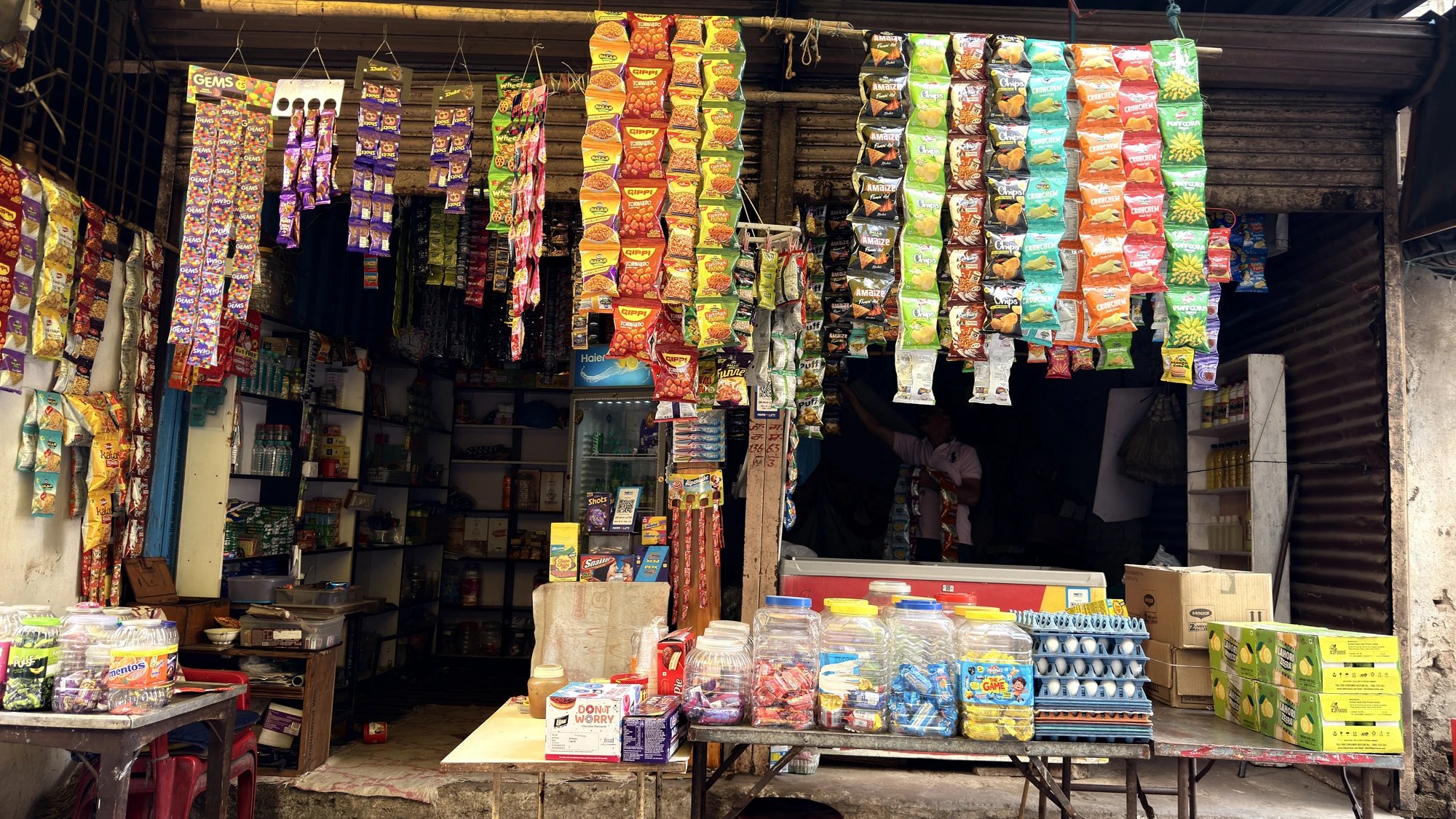
The neighbourhood provision store — where it all begins.
Grocery may sound like an easy business, but it is not. I am sure of that.
India has always been a land of trading and business operations, and at the core of it lies offline channels of business. The biggest forefront of these trade practices is held by kirana shops — an ecosystem so widespread and unique to India. In the past few years, constant change, and the increasing speed of it, has had a critical impact on these stores — an impact so big it may be one of the biggest threats they have faced in their entire history.
The nature of competition has completely changed. Where competition used to be another human mind, this time it is data-backed, technologically advanced, systemized, and automated processes. This project is an attempt to understand this shift and respond to it with a structured approach.
A system focused on simple, scalable services and supporting products that work together as one ecosystem — making everyday decision-making and operational control easier, while preparing retailers for future expansion within a changing retail landscape.
01
Small, family-run grocery retailers (general trade)
02
Daily store operations and decision-making practices
03
In-shop workflows and operational control
- 01Inventory awareness and stock-related decisions
- 02Purchase planning and supplier interaction logic
- 03Credit handling and customer relationship dynamics
- 04Role distribution within family-run stores
- 05Sales tracking and day-to-day transaction flow
- 06Frontend and backend operational disconnect
- 01Designed for low-capital, high-constraint environments
- 02Builds on existing practices instead of replacing them
- 03Focus on enabling — not automating everything
- 04Prioritises adoption over complexity
System Direction
A product-led service system with a centralised in-shop operational layer — modular and scalable, with a low learning curve and minimal behavioural disruption, moving gradually toward structured, data-supported operations.
Design a product-led service system to structure fragmented, daily, repetitive tasks and management practices of a retail grocery store into a flexible, unified operational layer — reducing cognitive load and decision fatigue through a centralised data-recording mechanism and modular, expandable micro-services, while building readiness for seamless omnichannel operations.
01
Grow into a venture-level scalable entity
02
Bridge traditional retail and digital systems
03
Become a daily-use operating system for small retail
04
Expand as a modular system across stores and regions
Next Chapter
Random AI music — not the best, but keeps you going