
Chapter · 05
The 3-Layer Approach and the system around it — then the framework, imagined.
Construction · Strategy · Delivery
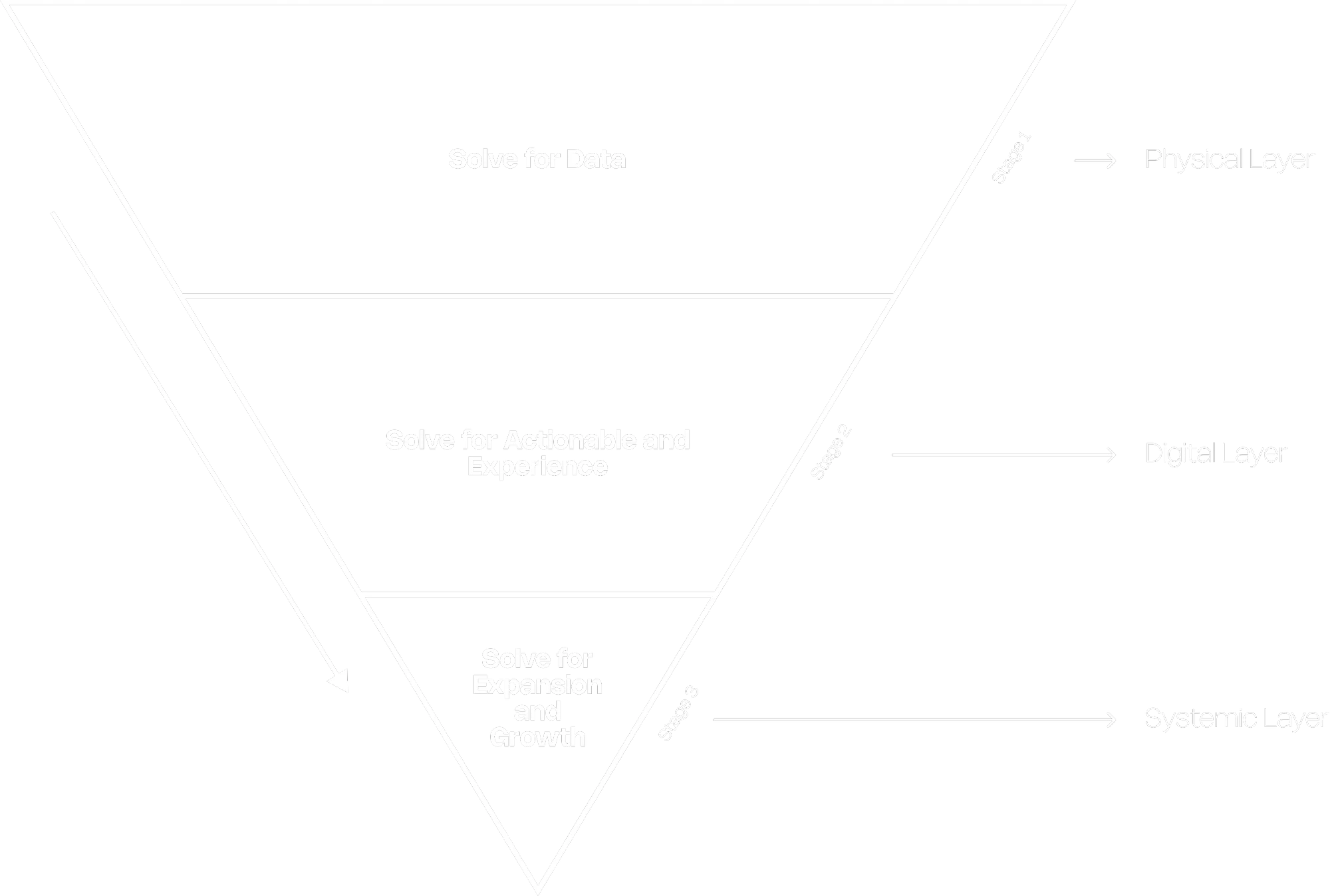
The 3-Layer Approach — the outcome of this project
A strategic, systemic framework that helps small shop owners respond to growing competitive pressure by aligning operations with changing customer behaviour — enabling them to adapt, coexist, and collaborate within the evolving retail landscape. Built as three layers: a physical interaction layer, a digital intelligence layer, and a systemic backbone — structuring daily operations, enabling better decision-making, and creating a foundation for continuous improvement, long-term growth, and scalable adaptation.
Stage 1 · Physical Layer
Solve for Data
The Icebreaker
The highest-priority layer. Before any reform, the system must start recording its activity in a structured way — the hardest step, because it breaks long-standing unstructured habits. A physical intervention accelerates this: tactile feedback, reduced loss of control, trust built through immediate visible outcomes.
Stage 2 · Digital Layer
Solve for Actionable & Experience
Experience & Action
Captured data translates into actionable insight — with a human in the loop. The owner remains the final decision point; the system surfaces what matters, reduces micro-management, and systemizes operations and customer experience without adding complexity.
Stage 3 · Systemic Layer
Solve for Expansion & Growth
Grow and Grow
Once the first two layers perform consistently, growth follows: continuous market integration and expansion without disrupting the core. The system extends capabilities rather than altering its foundation — physical and digital finally aligned into one structured workflow.
The framework pyramid — tap to study full-screen
The architecture maps how each stage actually behaves. Stage 1 defines its data expectations, touchpoints, user experience and important considerations — partial entries, speed first, plug-and-play. An AI layer sits between the stages, translating captured data through a custom library.
Stage 2 turns actionables into experience, trust and output delivery — with explainable reasoning and the owner keeping final decision power. Stage 3 compounds everything into shared logic, a replicable model, and a growth pathway where new hires and new locations inherit the same structure.
The working map behind the pyramid — tap to study full-screen
Starting at the counter
Data Collection
The counter is where business actually happens — every transaction, stock movement and credit interaction. The system captures reality as it happens, instead of reconstructing it later.
Capturing actions as they happen
Data Organization
Not data entry — actions themselves become data points. Data emerges naturally from use, without adding effort or disrupting speed.
Bringing scattered information together
Analyze & Synthesize
Sales, stock, cash and credit begin to exist in one connected layer — reducing reliance on memory without changing how decisions are taken.
Supporting decisions, not replacing them
Convert into Actionable
The shopkeeper continues to make all decisions — but with better awareness. Signals and clarity, not instructions.
Letting patterns emerge over time
Develop Experience
Repeated actions turn into insights; behaviour becomes visible. The framework grows more valuable not instantly, but over time.
Building gradually with use
Consistent Delivery
The system grows with the shop — from visibility, to understanding, to better control. No complete change demanded upfront.
Adapting to different ways of working
Systemize Micro-processes
Each shop operates differently. The framework aligns with existing behaviour rather than standardising it.
Enabling future connections
Integration & Expansion
Stabilise the internal system first — then suppliers, platforms and external systems become possible without losing control.
Four artefacts keep every decision aligned — how the framework is positioned, how it flows, why each part exists, and where it must respond.
Strategy Diamond
Where the solution operates, how it is delivered, what makes it different, how it grows, and how it creates value — arenas, vehicles, differentiators, staging, economic logic.
System Map
How everyday actions at the counter move through the system — from capture to structuring, to signal generation, to decision support and growth.
Logic Map
The cause-and-effect chain: inputs → activities → outputs → short-term visibility → long-term outcomes like credit control and reduced inefficiency.
Touchpoint Matrix
Every key moment across the solution’s lifecycle — where interaction happens, what the user expects, and how the three layers respond.
Retail Saarthi is a conceptual case study — one imagination of how the 3-Layer Approach and its system could be developed into a tangible product-service system. Not the outcome itself — a way to see the outcome.
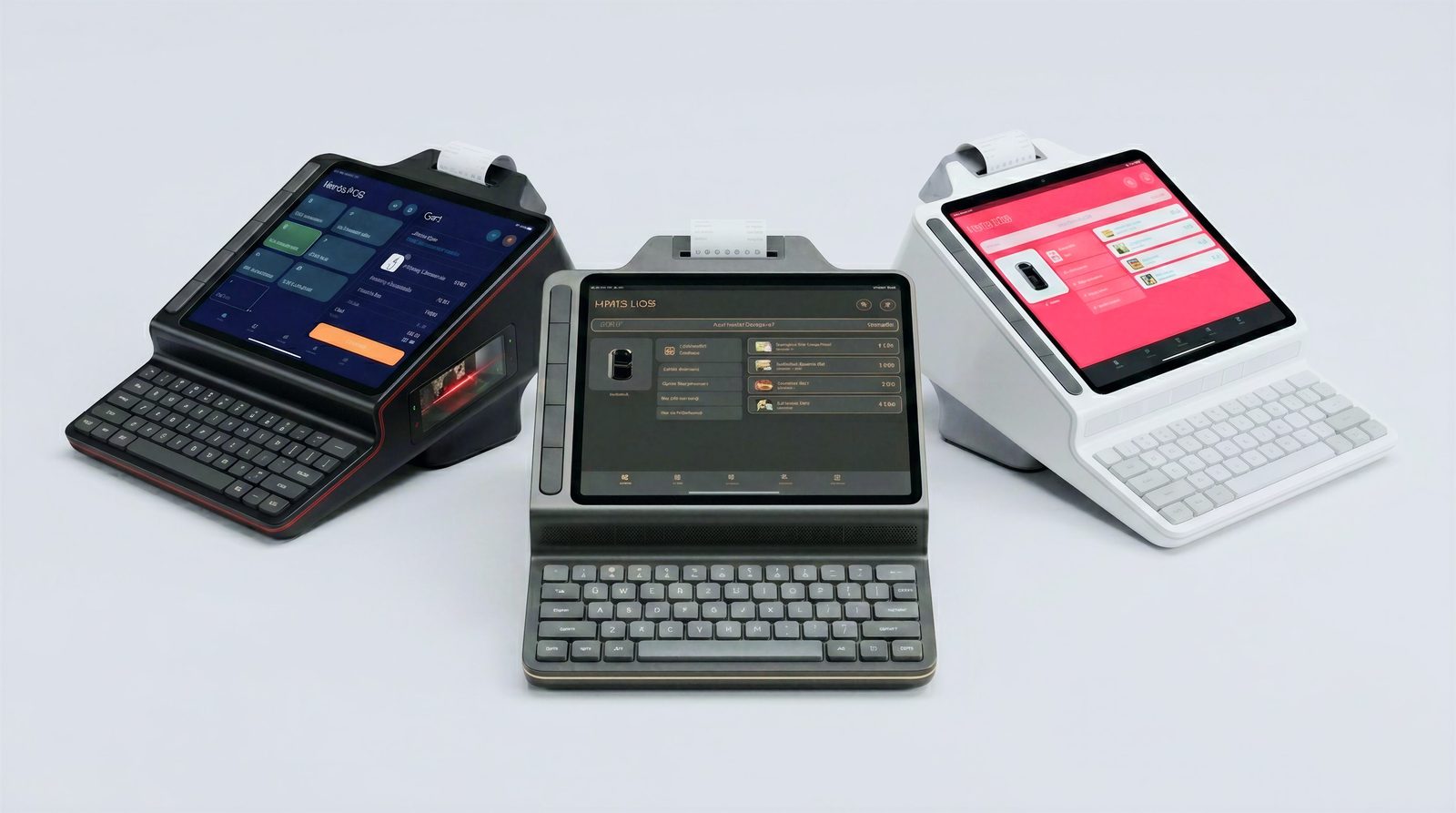
Concept visualisation — AI courtesy Vizcom
— Charles Holmes
This is not the end. It is not even the beginning of the end. But it is, perhaps, the end of the beginning.
— Winston Churchill
Then — the framework, imagined
Random AI music — not the best, but keeps you going